Discover the New Year’s Day Foods You’re Supposed to Eat First and what they represent!
The idea behind New Year’s Day Foods You’re Supposed to Eat First is simple but deeply rooted: the first bite of the year carries meaning!
The “Eat It First” Strategy That Makes This Tradition Actually Work
If you try to cook ten full dishes, you’ll spend New Year’s Day staring into your fridge like it owes you answers. Here’s how I do it instead:
- Make one “First Plate” that includes 4–6 of these foods in small portions (think: a spoon of peas, a forkful of greens, a wedge of cornbread, a slice of pork).
- Use the rest as add-ons throughout the day: soup, snacks, a noodle bowl, fruit on the counter that everyone grazes.
- Keep it grab-friendly. New Year’s Day energy is slow, cozy, and mildly confused.
Now let’s get into the ten!
New Year’s Day Foods
1) Black-Eyed Peas

Why You Eat Them First And Why It Makes Sense
Black-eyed peas are the classic Southern “good luck” food—deeply tied to New Year’s traditions and dishes like Hoppin’ John.
They make sense first because they’re humble, filling, and steady—a “start simple, start strong” kind of bite.
Ingredients (For A Quick First-Bowl Black-Eyed Peas, Serves 6)
- Dried black-eyed peas – 1 lb (or 3 cans, drained and rinsed if you’re keeping it easy)
- Yellow onion – 1, finely diced
- Celery – 2 ribs, diced
- Garlic – 4 cloves, minced
- Smoked turkey wing or ham hock – 1 (or smoked paprika + butter if you’re going meatless)
- Chicken broth – 6 cups (or vegetable broth)
- Bay leaves – 2
- Black pepper – 1 tsp
- Salt – start with 1 tsp, adjust at the end
- Apple cider vinegar – 1 tbsp (sharpens the flavor like a spotlight)
The “Lucky Spoonful” Routine
- Sort And Rinse (If Using Dried): Pour peas onto a tray and pick out any debris. Rinse until the water runs clear.
- Build The Flavor Base: In a pot, heat 1 tbsp oil. Sauté onion and celery 6 minutes until soft. Add garlic and cook 30 seconds.
- Add The Peas And Broth: Add peas, smoked meat (if using), broth, bay leaves, pepper, and 1 tsp salt.
- Simmer Like You Mean It: Bring to a boil, then lower to a gentle simmer. Cover partially. Cook 45–60 minutes (or until creamy-tender). Stir every 10 minutes so nothing sticks.
- Season At The End: Remove bay leaves and smoked meat bone. Stir in vinegar. Taste and salt properly.
How To Serve Them First: Spoon a small portion into bowls, top with a few drops of hot sauce, and call it the first bite of the year.
2) Collard Greens

Why You Eat Them First And Why It Makes Sense
Collard greens symbolize wealth because their green color resembles money in the classic Southern tradition. They also make sense first because greens are a “fresh start” reminder—bright, mineral-rich, and surprisingly comforting when cooked right.
Ingredients (Old-School Pot Of Greens, Serves 6–8)
- Collard greens – 2 large bunches (about 2½–3 lb)
- Smoked turkey leg or ham hock – 1
- Onion – 1, sliced
- Garlic – 4 cloves, smashed
- Chicken broth – 6 cups
- Red pepper flakes – ½ tsp
- Brown sugar – 1 tsp (balances the bitterness)
- Apple cider vinegar – 2 tbsp
- Salt and black pepper – to taste
The “Silky Greens, Not Stringy Sadness” Routine
- Wash Like A Professional: Collards hold grit. Fill a sink with cold water, submerge leaves, swish hard, lift out, repeat until no sand settles.
- Strip And Slice: Remove thick stems. Stack leaves, roll tightly, slice into ribbons.
- Start The Pot: Add smoked meat, onion, garlic, broth, pepper flakes, and sugar. Simmer 20 minutes to build flavor.
- Add Greens In Waves: Add a handful at a time, stirring down as they wilt.
- Simmer Until Tender: Cover and cook 45–60 minutes, stirring occasionally.
- Finish Bright: Stir in vinegar. Taste. Salt decisively.
How To Serve Them First: Put a forkful on the first plate next to peas or cornbread. Greens are the “money bite.”
3) Cornbread

Why You Eat It First And Why It Makes Sense
Cornbread is often linked with “gold” and prosperity in New Year food traditions. And practically? Cornbread is your edible napkin. It scoops peas, soaks pot liquor, and makes the first plate feel complete.
Ingredients (Skillet Cornbread, Serves 8)
- Yellow cornmeal – 1 cup
- All-purpose flour – 1 cup
- Baking powder – 1 tbsp
- Sugar – 2 tbsp (or 1 tbsp if you’re team less-sweet)
- Salt – 1 tsp
- Eggs – 2
- Buttermilk – 1½ cups
- Melted butter – 6 tbsp
- Cast iron skillet – 10-inch (or baking dish)
The “Golden Wedge” Routine
- Preheat Properly: Oven to 425°F (220°C). Put skillet in oven 10 minutes to heat.
- Mix Dry: Cornmeal, flour, baking powder, sugar, salt.
- Mix Wet: Eggs, buttermilk, melted butter.
- Combine Fast: Stir wet into dry just until smooth.
- Bake Hot: Pull skillet, add 1 tbsp butter to coat, pour batter in. Bake 18–22 minutes until deep golden.
- Rest 10 Minutes: It sets and slices clean.
How To Serve It First: Cut small wedges. Cornbread first means “start with gold.”
4) Pork

Why You Eat It First And Why It Makes Sense
Pork is a common New Year tradition tied to prosperity and “moving forward” symbolism—pigs root forward, not backward. Also? Pork tastes like celebration without needing a confetti cannon.
Ingredients (Garlic-Black Pepper Pork Roast, Serves 6–8)
- Pork shoulder or pork loin – 3 to 4 lb
- Salt – 2 tsp
- Black pepper – 2 tsp
- Garlic powder – 2 tsp
- Smoked paprika – 1 tsp
- Brown sugar – 1 tbsp
- Onion – 1, sliced
- Chicken broth – 1 cup
The “Forward Motion Roast” Routine
- Season Boldly: Mix salt, pepper, garlic powder, paprika, sugar. Rub all over pork.
- Sear For Flavor: Sear in a hot pan 3 minutes per side until browned.
- Roast Low: Place onion in a roasting pan, pork on top, add broth. Cover tightly. Roast at 325°F (165°C) for 2½–3½ hours until fork-tender (shoulder) or juicy and done (loin).
- Rest 15 Minutes: Juices settle. Don’t skip this.
How To Serve It First: A small slice on the first plate. You’re literally starting the year “moving forward.”
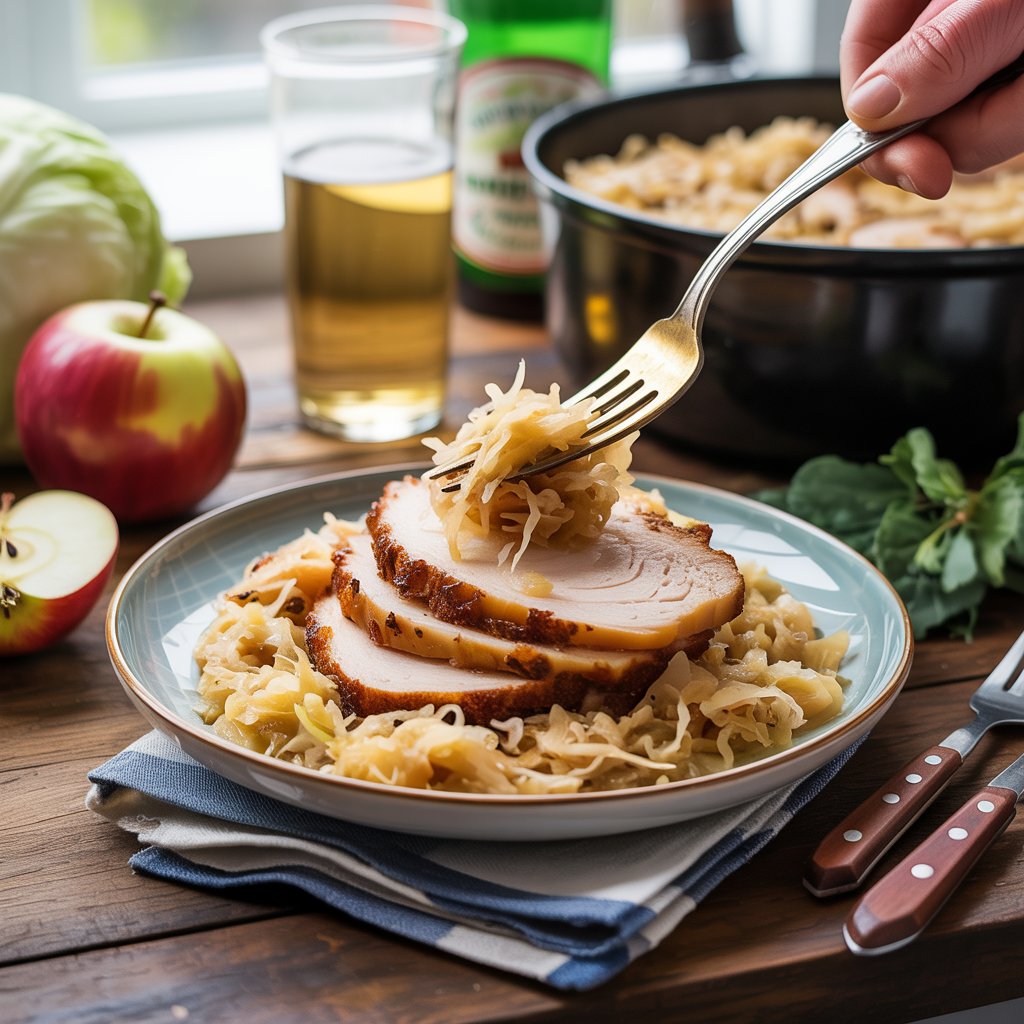
5) Sauerkraut (Or Cabbage)

Why You Eat It First And Why It Makes Sense
Cabbage and sauerkraut show up in New Year traditions as prosperity foods—especially in German-influenced and Pennsylvania Dutch customs. And as a cook, I love it because the tang cuts through rich food and wakes up your palate.
Ingredients (Quick New Year Sauerkraut, Serves 6)
- Sauerkraut – 2 lb, drained lightly (keep some juice)
- Onion – 1, sliced
- Apple – 1, sliced thin
- Butter – 2 tbsp
- Brown sugar – 1 tbsp
- Black pepper – ½ tsp
- Caraway seeds – ½ tsp (optional but classic)
- Beer or broth – ½ cup
The “Tangy Wealth Bowl” Routine
- Sauté Onion In Butter: 6 minutes until soft.
- Add Apple: Cook 2 minutes.
- Add Sauerkraut + Seasoning: Stir in sugar, pepper, caraway.
- Simmer 20 Minutes: Add beer/broth, cover, simmer until cozy and mellow.
How To Serve It First: Forkful on the first plate next to pork. The flavor pairing is unbeatable.
6) Lentils

Why You Eat Them First And Why It Makes Sense
Lentils are a widely recognized New Year food for prosperity because they look like little coins. They also make sense first because they’re hearty, quick, and deeply satisfying.
Ingredients (Lentil “Coins” Bowl, Serves 6)
- Brown or green lentils – 1½ cups
- Onion – 1, diced
- Carrot – 1, diced
- Garlic – 3 cloves
- Olive oil – 2 tbsp
- Broth – 4 cups
- Bay leaf – 1
- Salt – 1 tsp, adjust at end
- Lemon juice – 1 tbsp
The “Prosperity Pot” Routine
- Sauté Onion + Carrot: 6 minutes in olive oil. Add garlic 30 seconds.
- Add Lentils + Broth: Add bay leaf and salt.
- Simmer 25–30 Minutes: Until tender but not mush.
- Finish With Lemon: Brightens everything.
How To Serve It First: A small bowl before anything else. It’s the “coins in your pocket” bite.
7) Long Noodles (Soba Or Any Long Noodle)

Why You Eat Them First And Why It Makes Sense
Long noodles are associated with longevity in several New Year traditions. And from a cooking standpoint: noodles are comfort you don’t have to explain.
Ingredients (Longevity Soba Bowl, Serves 4)
- Soba noodles – 12 oz
- Broth – 4 cups
- Soy sauce – 3 tbsp
- Sesame oil – 1 tsp
- Ginger – 1 tbsp, grated
- Scallions – 3, sliced
- Soft-boiled eggs – 4 (optional but perfect)
The “Don’t Break The Noodles” Routine
- Cook Soba: Boil, cook per package, rinse cold to remove starch.
- Heat Broth: Warm broth with soy, sesame oil, ginger.
- Assemble: Noodles in bowls, broth over, scallions, egg on top.
How To Serve It First: Serve as the first warm bite of the day—quiet, steady, long-life energy.
8) Fish

Why You Eat It First And Why It Makes Sense
Fish appears in many “good luck foods” lists tied to abundance and prosperity themes. Also: it’s light, clean, and makes your first meal feel fresh.
Ingredients (Crispy Lemon Fish, Serves 4)
- White fish fillets – 4
- Salt – 1 tsp
- Black pepper – ½ tsp
- Flour – ½ cup
- Butter – 2 tbsp
- Olive oil – 2 tbsp
- Lemon – 1
- Parsley – chopped
The “Crisp, Clean Start” Routine
- Season Fish: Salt and pepper.
- Light Flour Coat: Dust in flour, shake off excess.
- Pan-Sear: Butter + oil hot. Cook 3–4 minutes per side.
- Finish With Lemon: Squeeze lemon, sprinkle parsley.
How To Serve It First: A small bite with lemon. Bright food = bright start.
9) Pomegranate

Why You Eat It First And Why It Makes Sense
Pomegranates show up in New Year food traditions as a symbol of prosperity and good fortune. And practically: those jewel-like arils make everything look festive with zero effort.
Ingredients (Fast Pomegranate “First Bite” Bowl, Serves 6)
- Pomegranate arils – 1½ cups
- Greek yogurt – 2 cups
- Honey – 2 tbsp
- Pistachios – ½ cup
- Pinch of salt
The “Jewel Bowl” Routine
- Sweeten Yogurt: Stir yogurt + honey + salt.
- Top Heavily: Pomegranate + pistachios.
- Serve Immediately: Crunch stays crisp.
How To Serve It First: One spoonful. It’s bright, festive, and feels like abundance in a bowl.
10) Grapes (The “Lucky Months” Bite)

Why You Eat Them First And Why It Makes Sense
The tradition of eating twelve grapes is famously associated with Spain—one grape for each month of the coming year. Even if you do this on New Year’s Day instead of midnight, it still works as a “month-by-month intention” ritual you can literally taste.
Ingredients (Serves 1–4, Depending On How Competitive You Get)
- Seedless grapes – 12 per person
- Optional: peeled grapes (for speed)
The “12 Months, 12 Bites” Routine
- Portion 12 Grapes Per Person: Put them in little cups so it feels ceremonial.
- Eat Them Slowly On New Year’s Day Morning: One bite, one intention.
- Make It Fun, Not Dangerous: If you’re serving kids, slice grapes in half. (No drama on day one.)
How To Serve Them First: Put the cup by your coffee. You start the day with twelve tiny promises.
The First Plate I Want You To Make (So You Actually Do This)
Here’s my favorite “First Plate” combo that covers most traditions without overwhelming you:
- 1 spoon black-eyed peas
- 1 fork collard greens
- 1 wedge cornbread
- 1 slice pork + a forkful sauerkraut
- 12 grapes on the side
That plate hits luck, wealth, gold, forward motion, and “months ahead” in one sitting. It also tastes incredible.
If you want a New Year’s Day that feels grounded, abundant, and delicious from the very first bite, keep this list close—because New Year’s Day Foods You’re Supposed to Eat First is the kind of tradition that tastes even better when you actually enjoy making it.
Do not miss these New Year Sweet Treats!