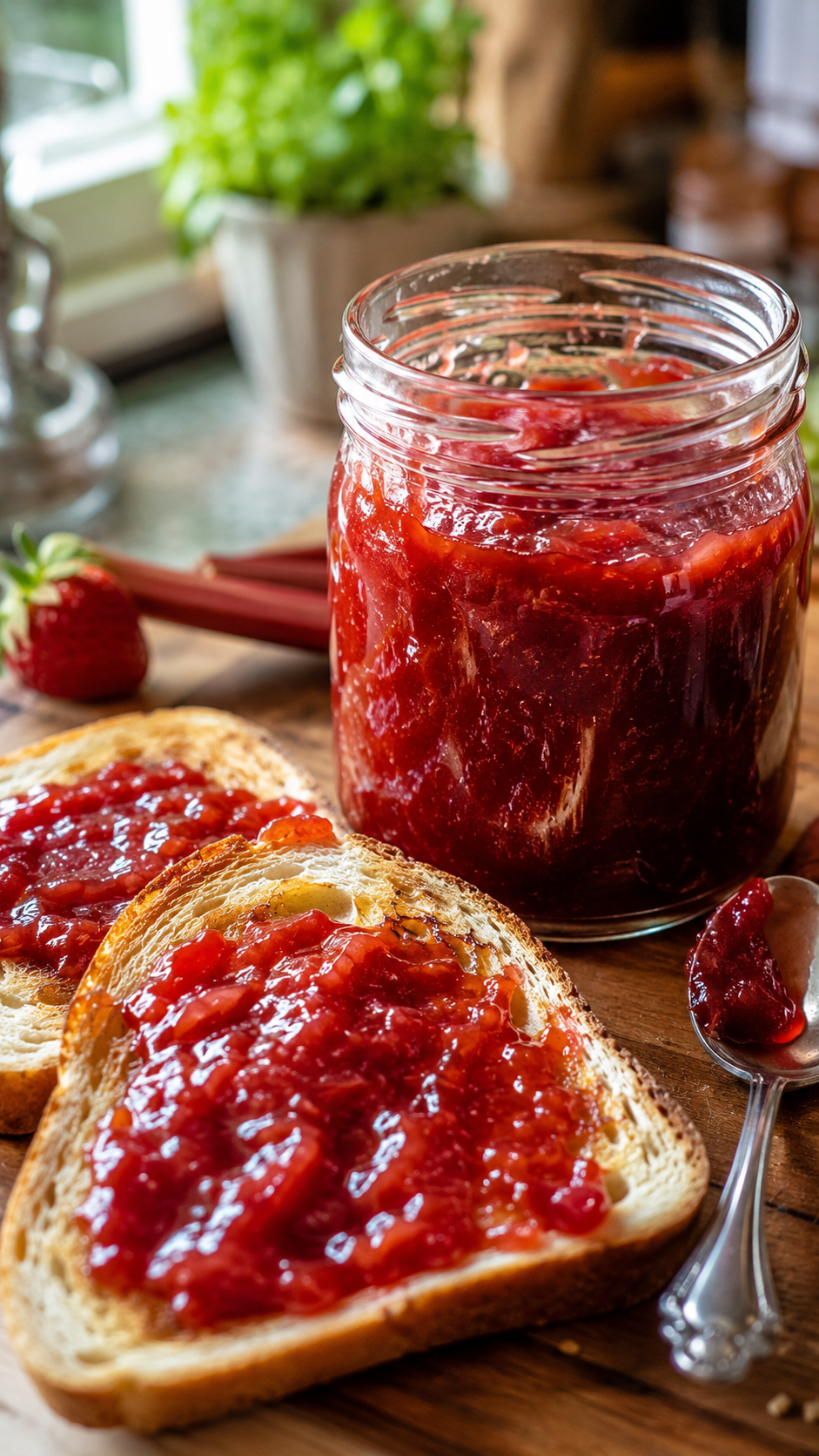

This strawberry rhubarb jam brings old-fashioned fruit stand flavor to the table, with a lovely sweet-tart bite and a ruby color worth showing off!

If you have been looking for a strawberry rhubarb jam that tastes bright, fruity, glossy, and just the right amount of tangy, this is your jar!
Fresh strawberries bring juicy sweetness, rhubarb brings that little lip-smacking tartness, and lemon juice keeps everything lively instead of flat.
This is jam with personality, the kind you spoon onto toast and then somehow “accidentally” need another slice because quality control is serious work!
This is a small-batch jam, which means you do not need a giant pot, an afternoon-long commitment, or a kitchen that looks like a fruit tornado passed through.
You can prepare it with fresh or frozen strawberries and rhubarb, though fresh gives you prettiest color and cleanest texture.
Frozen fruit works beautifully too, just thaw it first and include juices because that is flavor, not waste!
Ingredients
- 4 cups chopped fresh strawberries, hulled and cut into small pieces
- 3 cups chopped rhubarb, cut into 1/2-inch pieces
- 3 cups granulated sugar
- 2 tablespoons bottled lemon juice
- 1 teaspoon lemon zest, optional but lovely
- 1/4 teaspoon fine salt
- 1/2 teaspoon unsalted butter, optional, to reduce foam
Servings
Makes about 4 half-pint jars, or about 64 tablespoons of jam.
How to Make Strawberry Rhubarb Jam

Place chopped strawberries and rhubarb in a large, heavy-bottomed pot, then add sugar, bottled lemon juice, lemon zest if using, and salt, and stir everything together until fruit looks shiny and juicy.
Let mixture sit for 20 to 30 minutes before cooking, because this little pause pulls juice from fruit, starts dissolving sugar, and helps jam cook more evenly instead of scorching at bottom while fruit on top is still acting innocent!
Set pot over medium heat and stir often until sugar fully dissolves and fruit begins releasing more juice, which usually takes about 5 to 7 minutes.
At first it will look chunky and dry-ish, then suddenly fruit will relax into a glossy syrup, and that is your sign things are moving in right direction.
Keep scraping bottom and corners of pot with a wooden spoon or heatproof spatula, because jam loves to hide sugar at edges like it is saving snacks for later.
Increase heat to medium-high and bring mixture to a lively boil, stirring very often. You want bubbles across surface, not just lazy bubbling around edges.
Once it reaches a full boil, keep cooking for 15 to 22 minutes, depending on fruit juiciness, pot width, and heat level.
Wider pots cook faster because water evaporates quickly, while narrow pots need a little more time. Don’t walk away here! Jam can go from beautiful to “why does my kitchen smell dramatic?” faster than anyone deserves.
As jam cooks, fruit will soften, foam may rise, and color will deepen into a shiny ruby shade. Mash fruit lightly with a potato masher if you like smoother jam, or leave some tender pieces if you love jam with texture.
I usually mash about half because it gives jam body while still leaving little fruit bits that make each spoonful taste homemade. If foam bothers you, stir in butter during final few minutes or skim foam with a spoon.
Start checking jam around 15 minutes. Place a small plate in freezer for 5 minutes, then spoon a little hot jam onto cold plate and wait 30 seconds. Push it gently with your finger.
If it wrinkles softly and does not run like juice, it is ready. If it slides around like it has weekend plans, keep cooking 2 to 3 more minutes and test again.
You can also use a thermometer: jam usually sets around 220°F at sea level, but visual cues matter too, because fruit, altitude, and pot size all like to have opinions!
When jam is ready, remove pot from heat and let it stand for 2 minutes so bubbling calms down. Stir once more, then ladle hot jam into clean jars, leaving about 1/4 inch space at top.
Wipe rims clean, add lids, and let jars cool at room temperature before refrigerating.
This refrigerator version keeps well for about 3 weeks in fridge or up to 3 months in freezer, as long as you use freezer-safe jars and leave a little extra headspace for expansion.
For shelf-stable storage, process filled jars in a boiling-water canner using safe canning guidelines for your altitude, jar size, and recipe style.
Keep jars covered with at least 1 inch of boiling water, follow proper processing times, then let jars rest undisturbed for 12 to 24 hours before checking seals.
Any jar that does not seal should go into fridge and be eaten first, which is honestly not a tragedy when toast exists!
Serving Suggestions

Spread this Strawberry Rhubarb Jam on buttered toast, English muffins, biscuits, pancakes, waffles, crepes, scones, or warm cornbread.
Spoon it over Greek yogurt, vanilla ice cream, cheesecake, rice pudding, oatmeal, chia pudding, or cottage cheese if you like sweet-tart fruit with creamy things.
It is also excellent inside thumbprint cookies, layered into cake, swirled through muffins, brushed over a fruit tart, or served on a cheese board with brie, goat cheese, sharp cheddar, and crackers!
Helpful Tips For Best Jam
- Use ripe strawberries, but avoid berries that are mushy or fermented-smelling, because jam concentrates flavor and bad fruit does not magically become charming in a pot.
- Choose rhubarb stalks that feel firm and crisp, then trim leaves completely because rhubarb leaves should not be eaten.
- Cut strawberries and rhubarb into similar small pieces so everything softens at similar speed.
- If rhubarb is cut too large, strawberries may collapse before rhubarb turns tender, and then you get jam with random chewy bits that feel like they missed meeting invite.
- Do not reduce sugar too much unless you are using a low-sugar pectin recipe made for that purpose. Sugar is not only sweetness here; it helps jam thicken, preserve texture, and create that glossy spoonable finish. You can reduce slightly if making refrigerator jam, but for shelf-stable canning, follow tested canning guidance instead of freestyle math.
- Use bottled lemon juice for consistent acidity, especially if canning. Fresh lemon tastes lovely, but bottled lemon juice gives more predictable acidity, and jam is not where we invite chaos to dinner.
Storage
- Refrigerator: Store cooled jam in fridge for up to 3 weeks.
- Freezer: Freeze in freezer-safe jars for up to 3 months, leaving extra space at top.
- Shelf-stable canning: Use proper boiling-water canning instructions and altitude-adjusted processing times.
This strawberry rhubarb jam is sweet, tart, glossy, and full of fresh fruit flavor, with strawberries doing juicy heavy lifting and rhubarb adding that bright little zing that makes every bite wake up.
Make one batch when rhubarb is in season, tuck a jar in fridge, and prepare for toast to become a full personality trait! Once you taste that ruby spoonful warm from pot, store-bought jam may need to pack a tiny suitcase and think about its choices.
Do not miss this Watermelon Sorbet Recipe !