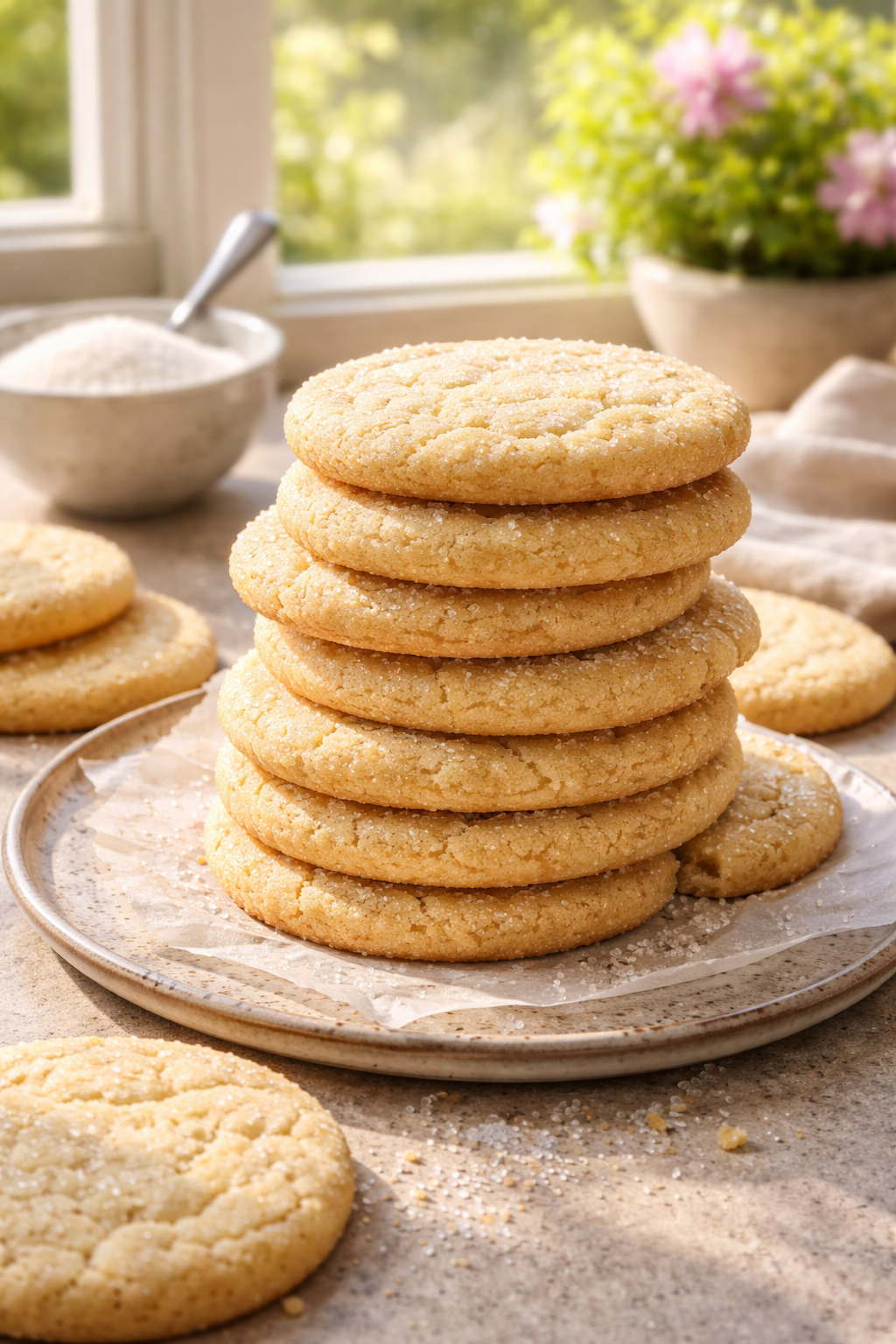
This sugar cookie recipe delivers soft centers, crisp edges, zero spreading, and real butter flavor.

This sugar cookie recipe exists for one reason: to end your search and retire your cookie doubts forever!
Ingredients For The Best Sugar Cookie Recipe

For The Cookies
- 2 ¾ cups (330g) all-purpose flour, spooned into the measuring cup and leveled (not scooped like you’re digging for treasure)
- 1 teaspoon baking powder (this gives lift without making them cakey)
- ½ teaspoon fine salt (salt makes sugar cookies taste like cookies, not sweet cardboard)
- 1 cup (226g) unsalted butter, softened to cool-room temperature (press it and your finger leaves an imprint, but it shouldn’t look oily)
- 1 cup (200g) granulated sugar
- 1 large egg, room temperature (cold egg makes dough weirdly stiff and patchy)
- 1 large egg yolk, room temperature (this is the “soft center” secret)
- 2 teaspoons pure vanilla extract (use real vanilla; imitation tastes like regret)
- ½ teaspoon almond extract (optional) (classic bakery flavor—use it if you love that nostalgic “cookie shop” vibe)
For Rolling
- 2–3 tablespoons flour for dusting
- Powdered sugar (optional) for dusting your rolling pin if dough gets sticky—this keeps it sweet, not tough
Baking Tools That Make Life Easier
I’m not saying you need these, but I am saying your life gets better with them.
- Stand mixer or hand mixer (your arm deserves peace)
- Rubber spatula (for scraping every last bit of dough like a responsible adult)
- Baking sheets (two if you have them, because swapping hot pans changes cookie shape)
- Parchment paper (prevents over-browning and makes cleanup feel like a magic trick)
- Rolling pin
- Cookie cutters (or a glass for circles)
- Cooling rack (so the bottoms don’t steam and get soggy)
Before You Start, Let Me Save You From Cookie Drama
I want you to win on the first try, so here’s the deal:
- Softened butter isn’t melted butter. Melted butter makes flat, greasy cookies that spread like gossip.
- Flour measurement matters. Scoop flour straight from the bag and you pack it down, which gives you dry cookies and heartbreak. Spoon and level.
- Chilling isn’t optional. Chilling controls spread, keeps edges sharp, and makes the dough easier to roll without turning into a sticky mess.
- Don’t overbake. Sugar cookies go from “perfect” to “why is it crunchy” in about 90 seconds.
Now take a breath. You’re about to make cookies that look like you’ve been doing this your whole life.
Instructions Title: The Dough-To-Glory Game Plan
1) Set Up Your Station Like A Person Who Means Business
- Preheat your oven to 350°F (175°C).
- Line two baking sheets with parchment paper. If you only have one sheet, you’ll bake in batches—just let the sheet cool completely between rounds. A hot sheet melts butter fast and makes cookies spread.
2) Mix Your Dry Ingredients First (So You Don’t Forget Them Later)
- In a medium bowl, whisk together flour, baking powder, and salt.
- Whisk for a good 15 seconds. You’re not just mixing—you’re evenly distributing the baking powder so you don’t get random puff spots.
3) Cream Butter And Sugar Until It Looks Like A Fluffy Cloud
- In a large bowl (or stand mixer), beat the softened butter and sugar on medium speed for 2–3 minutes.
- You’re looking for pale, fluffy, and slightly airy—like the butter is wearing a silk robe and feeling confident.
- Scrape the sides and bottom of the bowl halfway through. Butter likes to cling to the bowl like it pays rent there.
Why This Matters: Proper creaming gives you tender cookies with that perfect bite. Under-creaming makes them dense. Over-creaming can make them spread too much.
4) Add Egg, Egg Yolk, And Flavor Like You’re Building A Personality
- Add the whole egg and egg yolk. Beat on low until fully incorporated, about 20–30 seconds.
- Add the vanilla extract and optional almond extract. Beat again briefly.
- Scrape the bowl. Again. Always scrape. This is the secret handshake of good bakers.
What You Should See: A smooth, creamy mixture that looks like frosting before flour shows up.
5) Bring In The Flour Without Overworking It
- Add the dry ingredients in two additions. Mix on low speed after each addition, just until you don’t see dry flour anymore.
- Stop mixing the second it comes together. If you keep going, gluten develops and your cookies get tough—like they’re trying to prove something.
Dough Texture Check:
- It should feel soft but not sticky, and when you press it, it holds shape.
- If it feels sticky like wet sand, you likely need a bit more flour—but don’t panic yet. Chilling fixes a lot.
6) Chill The Dough Like It’s A VIP
- Divide the dough into two equal portions.
- Flatten each portion into a disk (this chills faster and rolls easier).
- Wrap tightly in plastic wrap.
- Refrigerate for at least 1 hour, ideally 2 hours.
Why This Matters: Chilling solidifies the butter and relaxes the flour. Translation: less spread, cleaner edges, easier rolling.
Rolling, Cutting, And Baking The Sugar Cookies
7) Roll With Confidence (And A Little Flour)
- Lightly flour your counter and rolling pin.
- Take one dough disk out of the fridge. Let it sit for 5 minutes if it’s rock-hard.
- Roll to ¼-inch thickness for classic cookies that stay soft but hold shape.
- If you want slightly crispier edges and sturdier cookies for decorating, go slightly thicker: ⅓ inch.
Rolling Tip I Live By: Roll from the center outward, and rotate the dough every few rolls. This prevents sticking and keeps thickness even.
8) Cut Clean Shapes Like A Pro
- Press cookie cutters straight down. Don’t twist. Twisting seals the edges and can prevent even rise.
- Place cut cookies on your lined sheet, about 2 inches apart.
Re-Rolling Dough Scraps (Without Tough Cookies):
- Gather scraps gently. Don’t knead like bread dough.
- Press together, chill for 10 minutes, then re-roll.
- You get clean cookies without making the dough angry.
9) Chill Again For Sharp Edges (This Step Feels Extra, But It’s Elite)
- Pop the tray of cut cookies into the fridge for 10 minutes before baking.
- This keeps shapes crisp and prevents spread.
-
If you’re short on space, even 5 minutes helps. But 10 minutes is where the magic lives.
10) Bake Until The Edges Look Set, Not Brown
- Bake at 350°F (175°C) for 9–11 minutes.
Pull them when:
- The edges look set and matte
- The centers look slightly soft but not wet
- You do not wait for deep golden color—sugar cookies finish setting as they cool
Baking Time Notes:
- Smaller cookies: closer to 9 minutes
- Large shapes: closer to 11 minutes
- Thicker cookies: add 1–2 minutes
11) Cool The Right Way So They Stay Soft
- Let cookies rest on the baking sheet for 5 minutes.
- Then move them to a cooling rack.
- Don’t decorate until fully cool unless you enjoy melted icing chaos.
Optional But Legendary: Simple Vanilla Glaze Icing

This is the icing you use when you want pretty cookies but don’t want royal icing to become your full-time job.
Ingredients
- 2 cups (240g) powdered sugar
- 2–3 tablespoons milk (start with 2)
- 1 teaspoon vanilla extract
- Pinch of salt
- Food coloring (optional)
Instructions
- Whisk powdered sugar, vanilla, salt, and 2 tablespoons milk.
- Add milk a teaspoon at a time until it drizzles smoothly but still holds shape.
- Dip cookie tops or drizzle with a spoon.
- Let set for 30–60 minutes.
- If you want a thicker “outline” style glaze, use less milk. If you want a flood glaze, add more.
Once you’ve made The Best Sugar Cookie Recipe this way—soft centers, crisp edges, real buttery flavor—you’ll never go back to bland, dry “holiday obligation” cookies again. Keep this recipe in your back pocket for birthdays, cookie swaps, midnight cravings, and those days when you just need your kitchen to smell like comfort and victory.